
Designer living room lighting allows for the configuration of refined environments with a strong identity. Read the article to discover how to achieve it.
Due to its "fluid" and multifunctional nature, the living room is one of the most complex domestic environments to light. In fact, different types of activities converge in the living room - from relaxation to conversation, from entertainment to work - which require a dedicated lighting hierarchy for each function.
It should also not be forgotten that the living room is the representative space par excellence and that light is the element that most influences its perception.
To make it sophisticated and welcoming, it is therefore essential to carefully curate both the design of the lamps and the way in which light is distributed and shaped within the environment.
In this article, we will discover all the advantages of designer lighting, while also providing ideas and advice for your most exclusive projects.
- The advantages of designer living room lighting
- How to integrate natural light and artificial systems?
- Where to find designer living room lighting?
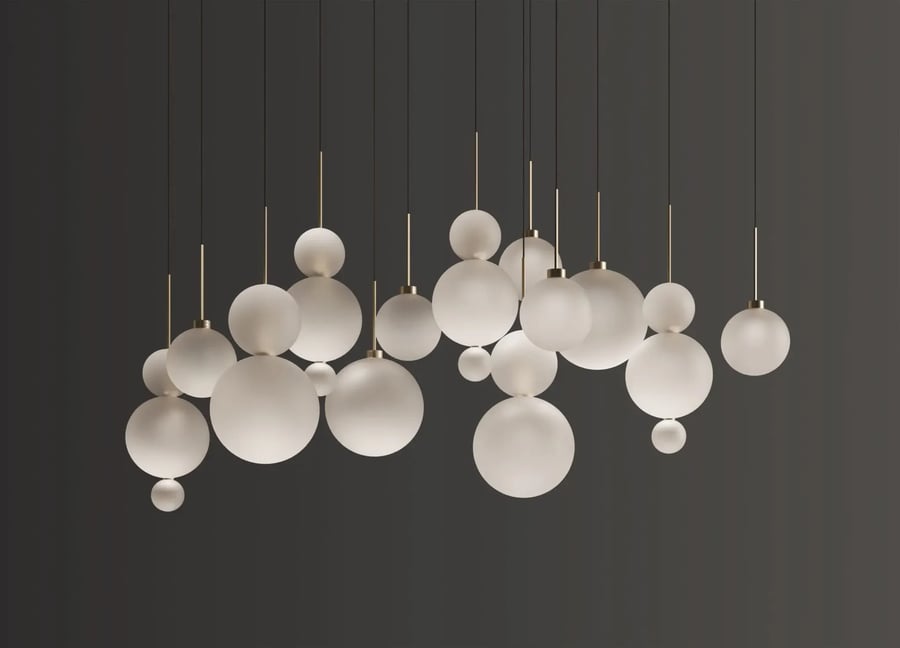
Opium
The advantages of designer living room lighting
Designer living room lighting is quite different from simply placing light sources in a given environment.
In this case, the starting point is not simply to illuminate the space, but to build it through light.
Artificial systems, carefully selected and positioned, become true architectural and scenic elements themselves, which do not invade the space but accompany it.
A designer lighting project has the extraordinary ability to establish lighting hierarchies that guide the gaze toward well-defined key elements. For example, through accent lighting, it is possible to channel attention toward works of art, textured walls, or designer objects.
Similarly, designer lighting allows for the definition of different functional areas within the living room, providing one or more dedicated light sources for each. Furthermore, lighting allows architects and interior designers to strengthen the furnishing composition, enhancing surfaces, fabrics, and coverings.
Last but not least, making decorative lighting the pivot of your interior design project means giving the living room a unique and distinctive stylistic imprint.
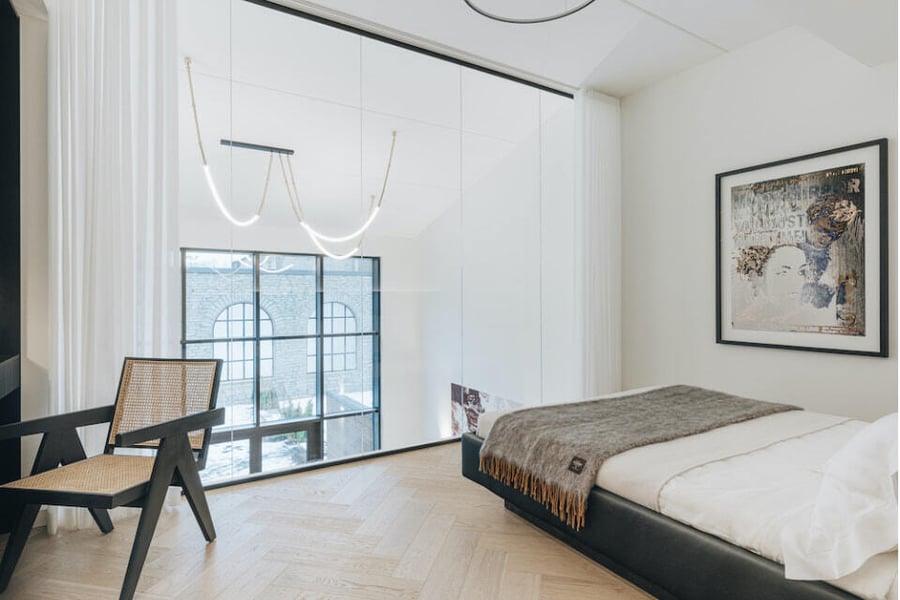
Leda
How to integrate natural light and artificial systems?
The living room is generally the domestic environment with the most openings to the outside. This makes it more essential than ever to correctly manage the integration between natural and artificial light.
The first best practice to implement is certainly to enhance natural light as the main light source during daylight hours. This means that before determining how many and which artificial systems to provide, the orientation of the room, the size of the openings, and the depth of the space must be analyzed.
In designer living room lighting, light must also be conceived as a single system, where natural and artificial light dialogue with each other. In this sense, artificial sources work best when they support, rather than replace, natural light.
Thinking in these terms will allow for the configuration of a lighting project capable of guaranteeing a certain perceptual coherence throughout different times of the day, without excessive contrasts. The goal is to set the desired atmosphere based on the moment and activities, but without distorting or altering the overall perception.
For this integration between the two types of lighting to be possible, it is essential to structure the lighting project on multiple levels, thus overlapping several light sources. This means providing one or more fixtures for ambient lighting, task light, and accent lighting.
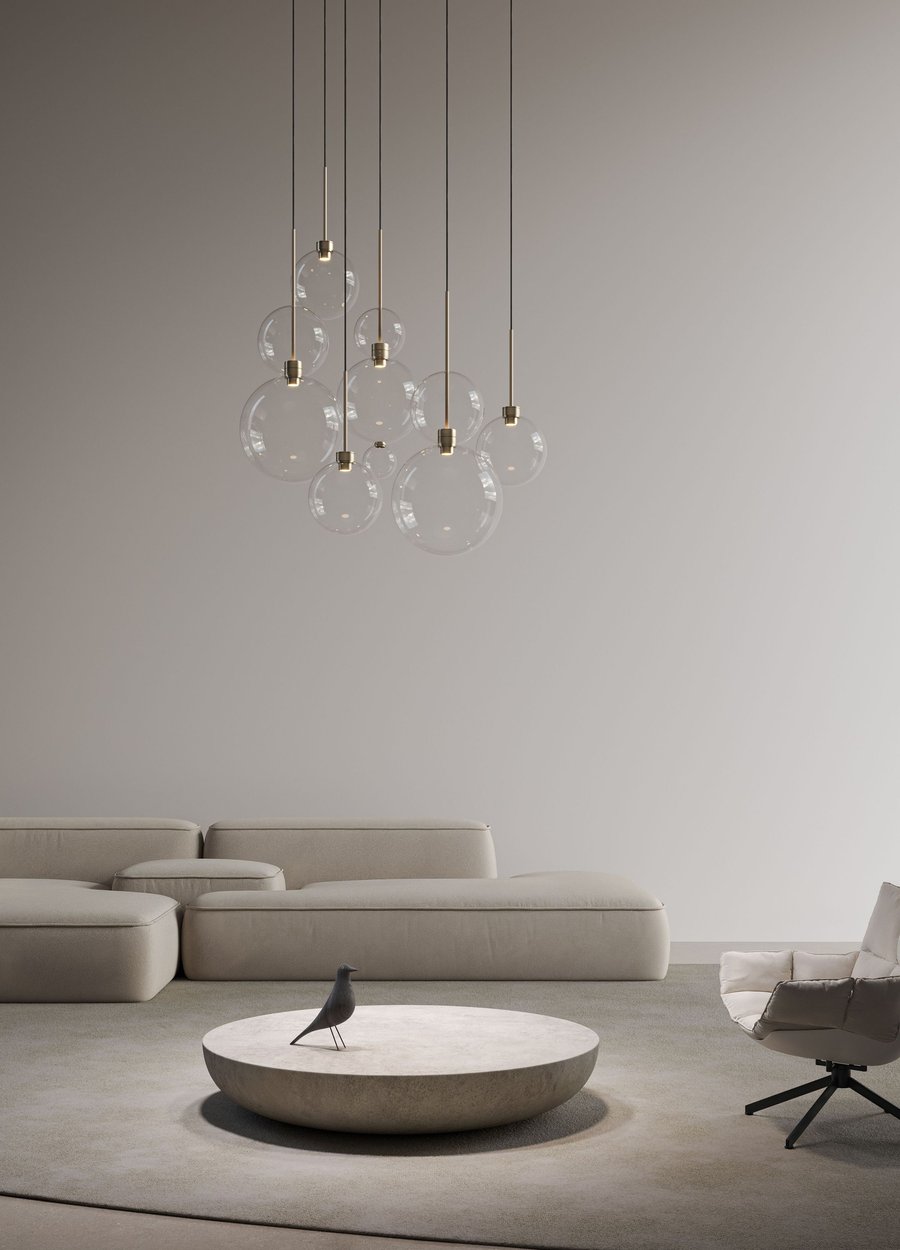
Opium
Why choose designer living room lighting?
We have just seen the advantages of designer living room lighting. Now let's go into more detail, starting with a substantial paradigm shift: orchestrating designer lighting is not equivalent to simply choosing beautiful lamps.
Rather, it means integrating light into the interior design project, making it an active and decisive component in the construction of the space.
In luxury contexts, the identity value of the living room acquires fundamental importance, and it is precisely the light that makes it unique and non-replicable, both aesthetically and emotionally.
Imagine, for example, the scenic impact of a modular system like Leda, a necklace of luminous elements that decorates environments like a jewel on a woman's neck.
Imagine it hanging in a variety of personalized compositions above the dining table or a coffee table. The value of these artificial systems lies in their ability to contribute decisively to the construction of the space's identity.
Another iconic example of decorative designer living room lighting is the Opium suspension lamp, a set of borosilicate glass spheres that seem to float in the air. Sculptural yet light, it is a suspended architecture, almost impalpable, perfect for enhancing height and setting an essential and refined atmosphere.
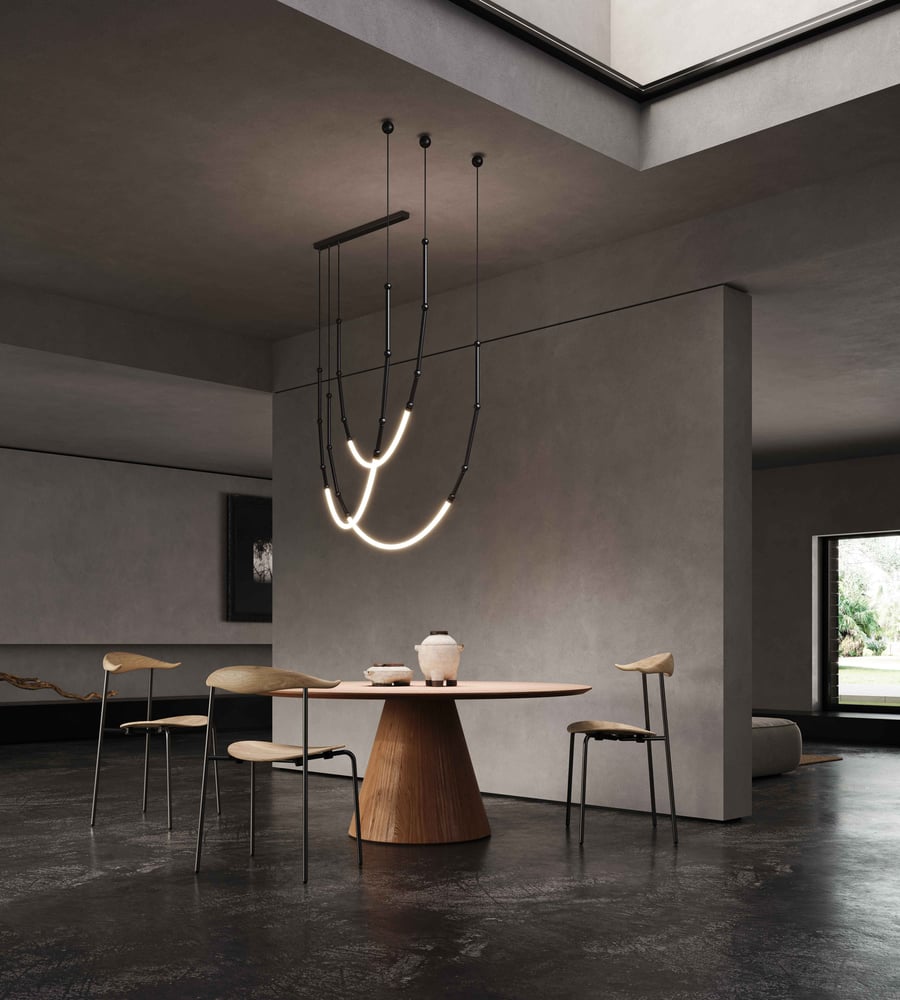
Leda
Control systems and intelligent dimming
We have talked about the importance of ensuring an ideal balance between natural light and artificial systems.
In this perspective, and to meet the needs of an increasingly demanding and attentive user, control and intelligent dimming systems become an integral part of the project.
These systems allow for overcoming not only the now obsolete "on/off" dichotomy but also the concept of basic dimming, making light a dynamic design variable.
Lighting is thus configured as an adaptive system that allows the user to calibrate both intensity and color temperature based on the time of day, the activities performed, etc. All this benefits not only the lighting scenery but also comfort, well-being, and energy savings.
Protocols such as DALI and 0-10V, along with wired or wireless control systems integrated with home automation systems, are among the most widespread technologies.
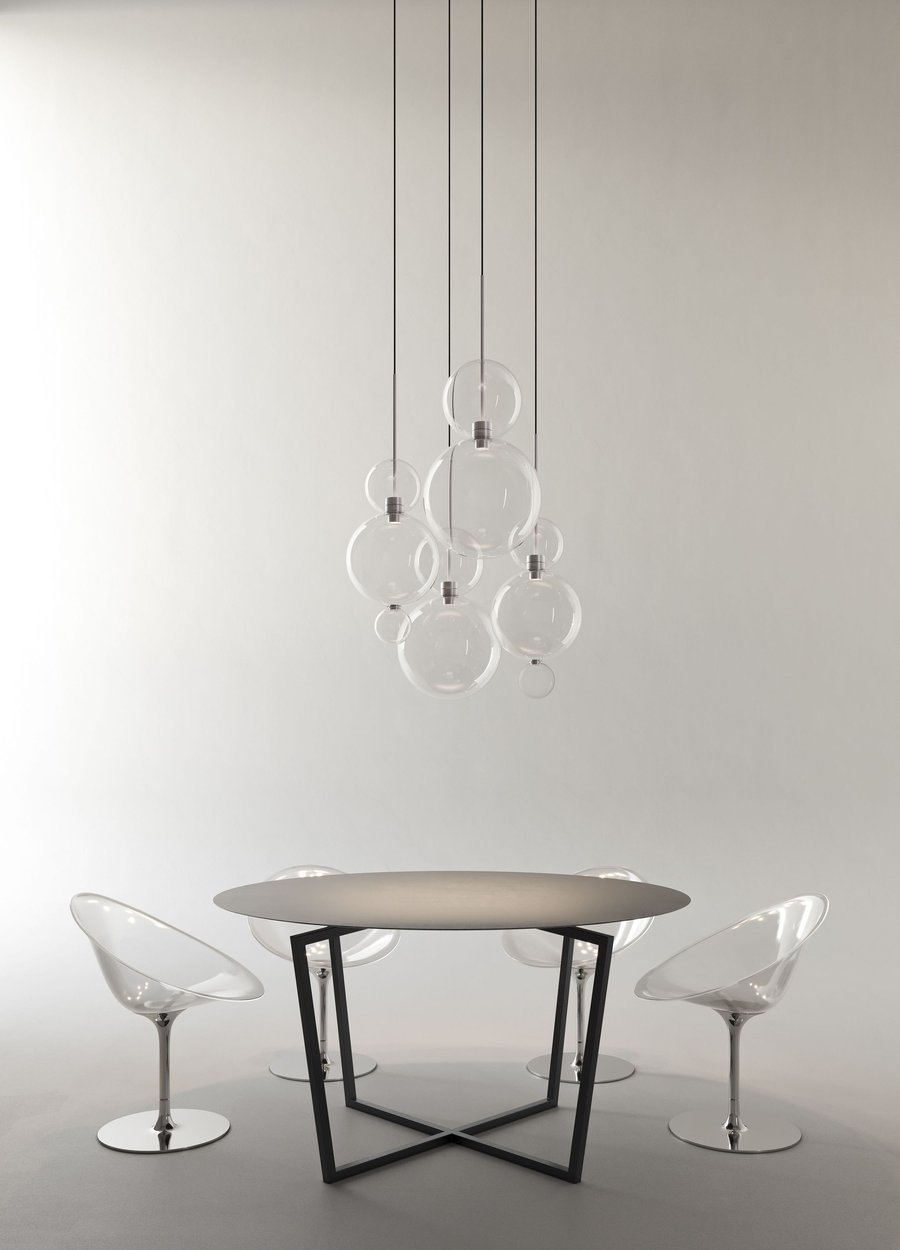
Opium
Where to find designer living room lighting?
We have seen how lighting can contribute decisively to the definition of the living room, focusing on the dialogue between natural light and artificial systems and on some iconic solutions by Karman.
A final key point is related to the need - especially when moving within the perimeter of luxury - to carefully choose who to rely on for the development of your project.
Selecting a manufacturer specialized in high-end decorative lighting, capable of bringing together aesthetic, technical, formal, and material research, is a decisive strategic step.
In this sense, Karman positions itself as a true design partner that, with its eclectic and immediately recognizable style, makes light its distinctive stylistic signature. This offers designers the possibility to create unique and personalized luminous narratives, within which light becomes the main narrating voice.
For more information, support, and assistance in selecting designer living room lighting consistent with your lighting projects, do not hesitate to contact us. We are at your complete disposal.